Discover precision-engineered electronics, motors, and cooling accessories vital for OEM integration and replacement setups.
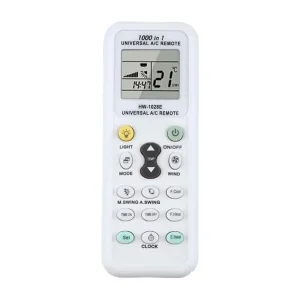
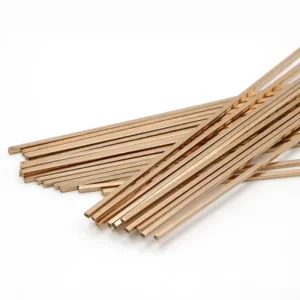
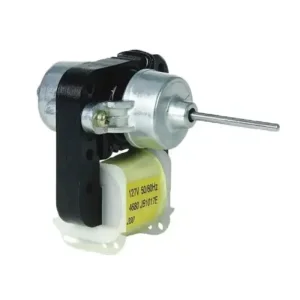
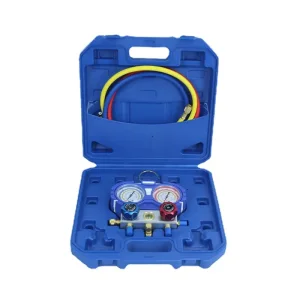
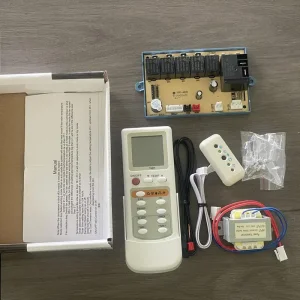
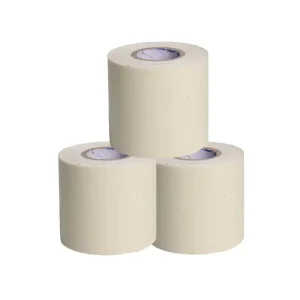
In the modern HVAC industry, search queries for "Remote Control For Air Conditioner Supplier & Suppliers" reveal a deep B2B user intent that goes far beyond simple hand-held plastic remotes. Corporate procurement officers, HVAC system designers, and industrial facility directors require integrated control systems—specifically, smart mainboards, frequency inverter PCBs, and corresponding terminal interfaces. They also demand companion piping infrastructure (such as access valves, heavy-duty filter driers, and high-purity copper manifolds) to construct functional, leak-free thermal regulation machinery. Ningbo Taojun Refrigeration is positioned to satisfy these complex industrial configurations.
Our corporate lineage, originating from the Xiangshan Refrigeration Accessories Factory of Zhejiang University in 1988, is fueled by a specialized R&D center featuring 15 engineers with academic backgrounds from the University of Science and Technology of China (USTC).
Mapping the technical parameters, supply hurdles, and purchasing metrics of commercial and industrial enterprises.
Modern commercial buildings, logistics parks, data centers, and multi-tenant residential complexes are rapidly transitioning away from legacy, localized thermostat models. B2B buyers now seek complete controller systems that facilitate central automation. The search for a reliable remote control for air conditioner supplier is guided by several global procurement drivers:
OEMs require PCB controls that support Modbus, BACnet, and Wi-Fi networks, enabling integration with Energy Management Systems (EMS) to dynamically monitor multi-zone HVAC arrays.
Components must comply with RoHS, WEEE, and REACH directives. Strict raw material testing ensures that no harmful brominated flame retardants or heavy metals leach out during operation.
Industrial AC controllers must resist thermal stress and humidity fluctuations. They require sealed relay cases, moisture-proof conformal coatings, and vibration-resistant chassis designs.
| Parameter Class | Technical Requirements | Industrial Application Impact |
|---|---|---|
| Operating Frequency | 38kHz (IR) / 433MHz & 2.4GHz (RF/Wi-Fi) | Guarantees multi-device communication without cross-talk or physical line-of-sight constraints. |
| Conformal Coating | MIL-I-46058C Compliant, Polyurethane/Acrylic | Prevents electrochemical migration and short circuits in high-humidity climates. |
| EEPROM Memory | Non-volatile configuration storage (min. 10 years retention) | Retains customized multi-system control protocols during power-outage events. |
| Raw Materials | High-purity Oxygen-Free Copper, Lead-free Solder | Ensures structural joints survive thermal expansion and contraction cycles. |
Why control electronics are only as reliable as the mechanical system they govern.
A common mistake in HVAC supply chain management is isolating the electronic remote controller from the mechanical refrigeration loop. A remote control unit sends signals to the compressor inverter board, which regulates output. If components like the copper filter drier, evaporator fan motor, or expansion access valve fail to operate within their design tolerances, the control board will trigger critical error codes (e.g., high-pressure faults), leading to system-wide failure.
Our engineering team resolves this bottleneck by designing integrated control systems. For example, our Universal AC Control Board System is calibrated to match the thermal response curves of our TAOJUN Copper Filter Driers and Double Copper Filter Driers. This ensures that refrigerant flow, pressure regulation, and signal processing remain synchronized.
"By matching our internal sensor feedback arrays with custom activated carbon/3A molecular sieve cores in our filter driers, we prevent moisture-induced voltage drops in the electronic expansion valves, boosting system-wide operational efficiency by up to 14%."
From infrared point-and-click to AI-driven predictive thermoregulation.
Legacy universal remotes rely on static code libraries. Taojun's new-generation control chips feature dynamic scanning logic. They analyze and map unknown infrared wave shapes, providing 99.8% compatibility across obsolete and modern HVAC units alike.
Transitioning from localized IR to integrated BLE-Mesh and Wi-Fi networks. This enables building operators to push updates, change setpoints, and monitor system performance from a centralized console, minimizing onsite maintenance visits.
By incorporating smart sensor diagnostics directly into our PCB controllers, the system can predict filter clogging, motor degradation, and refrigerant leaks. It alerts maintenance teams before a breakdown occurs.
A transparent look inside our ISO 9001-certified manufacturing workshops and advanced R&D laboratories.
Established in 1988, Ningbo Taojun Refrigeration has spent over three decades perfecting refrigeration components and HVAC system controls. Our core manufacturing machinery, imported from Germany, operates alongside strict automated quality inspection lines.
Ningbo Taojun Refrigeration Equipment Co., Ltd. is located in Xiangshan, Ningbo, a prominent coastal industrial hub in China. Founded in 1988, the company’s roots stem from the Xiangshan Refrigeration Accessories Factory of Zhejiang University. Over the past 30 years, it has evolved into a comprehensive, high-tech enterprise integrating design, manufacturing, sales, and aftermarket technical support.
Our product ecosystem is trusted by leading domestic and international appliance brands, including Haier, Xinfei, Midea, Gree, Whirlpool, Electrolux, and Huarui. The sales network extends across major Chinese cities and exports globally to markets in Europe, North and South America, Southeast Asia, the Middle East, and Africa.
Founded as Xiangshan Refrigeration Accessories Factory of Zhejiang University.
Established Ningbo Taojun Refrigeration Co., Ltd., launching the "Taojun" brand.
Certified as a National High-Tech Enterprise, acknowledging engineering and R&D achievements.
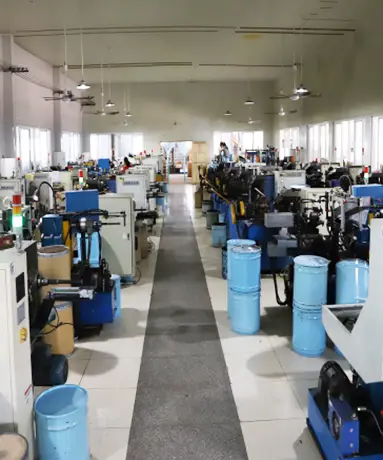
Advanced Manufacturing Workshop
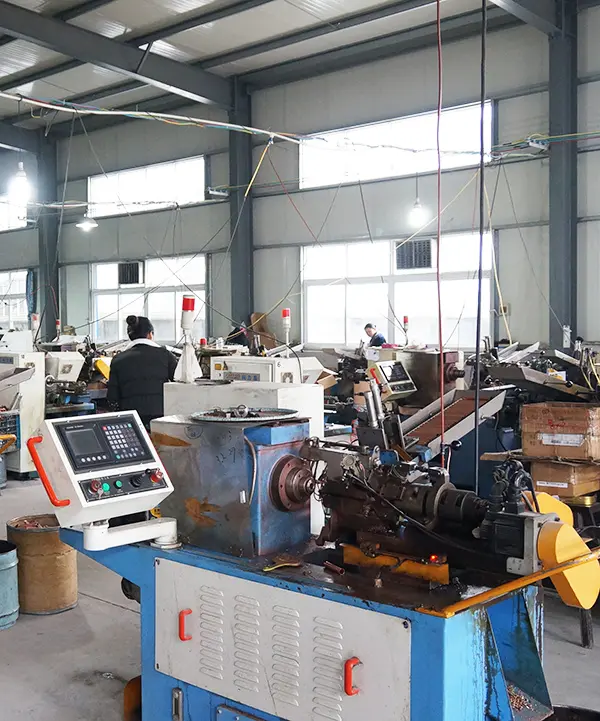
High-Speed Product Assembly Line
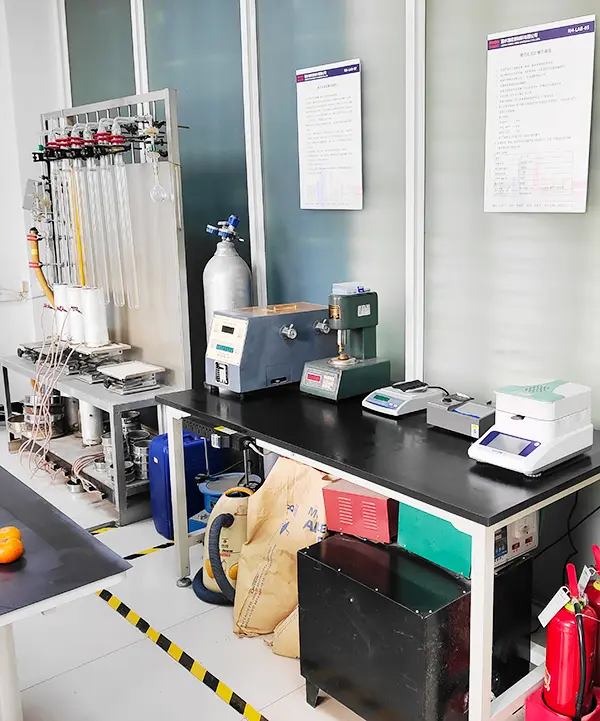
R&D Testing Laboratory
Detailed physical verification procedures ensuring trouble-free deployments across remote control and piping setups.
Every batch of remote control boards and frequency inverter PCBs goes through the following verification program:
To prevent system failures that could disrupt remote controller actions, our copper parts undergo strict mechanical testing:
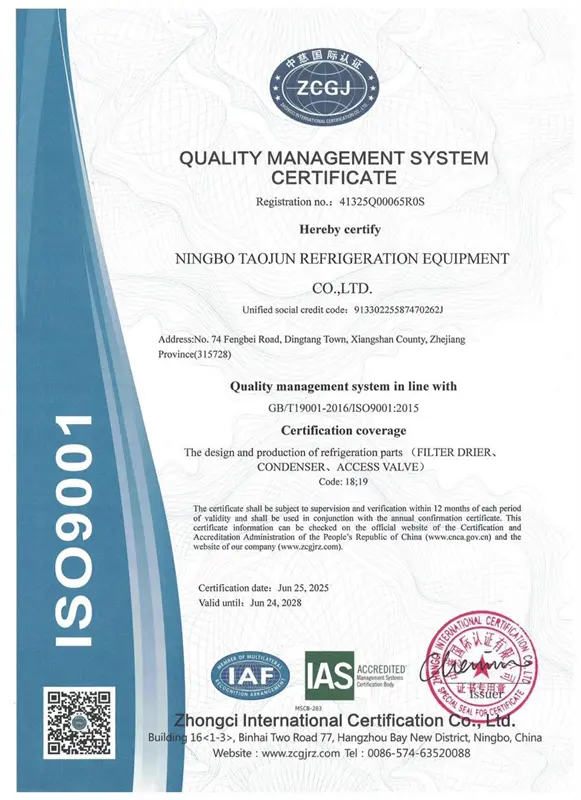
Main Registration Document
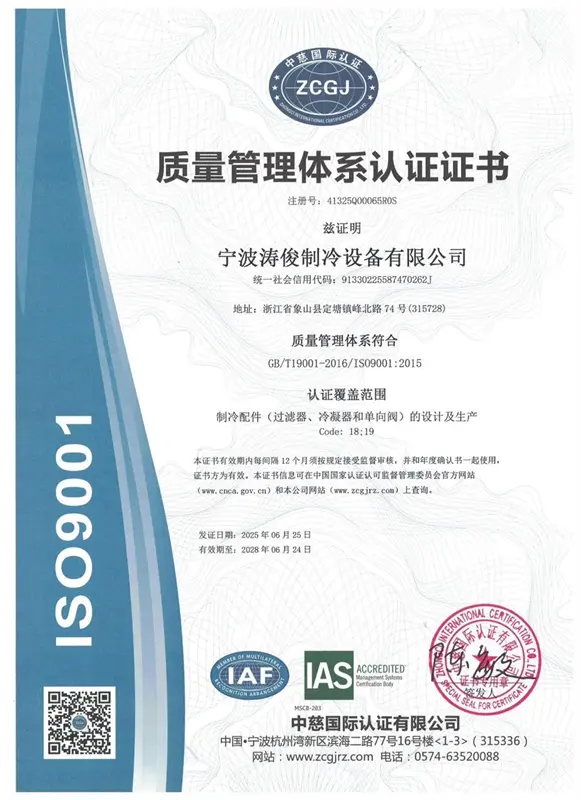
Detailed Certification Scope
Our quality management system is certified under registration number 41325Q00065R0S, issued by Zhongci International Certification. This registration is verifiable through China's CNCA database. This verification provides global procurement managers with the transparency and compliance records required for enterprise audit reports.
Answers to technical and logistics questions regarding commercial and industrial AC controller integration.
Yes. Our advanced frequency inverter PCBs and universal control systems can be built with modular UART/I2C communication chips. This allows them to interface with Modbus-RTU, BACnet, and custom Wi-Fi modules, making them compatible with building automation systems and smart home frameworks.
Our manufacturing plant holds GB/T19001-2016/ISO9001:2015 registration. Additionally, all core products are certified under EU RoHS environmental directives, REACH chemical restrictions, and hold US UL approvals for commercial pressure lines.
For electronic boards, we apply conformal silicone coatings to protect circuitry from humidity and salt air. For structural copper parts like filter driers and elbows, we use high-purity, oxygen-free copper pipes that resist stress corrosion cracking and pitting.
Our standard manufacturing MOQ is 500 units for standard electronic controller products. For custom designs involving unique PCB layouts or specialty brass/copper fittings, the MOQ varies based on size and manufacturing difficulty. Please contact our engineering department for detailed specifications.
When a filter drier becomes clogged, moisture enters the expansion valve, causing freeze-ups and pressure changes. The safety sensors on the AC control board detect this condition and shut down the system. The control board then transmits error alerts to the user's remote or central BMS console, indicating a system fault rather than an electronic failure.
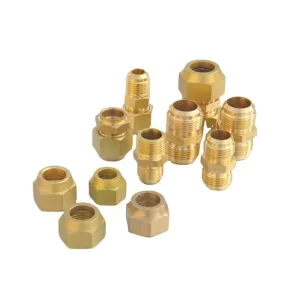
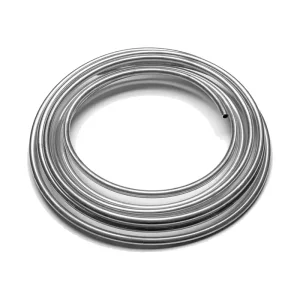
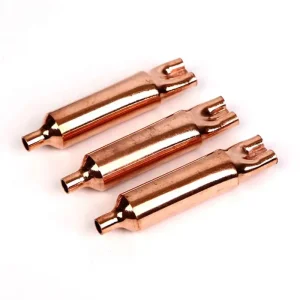
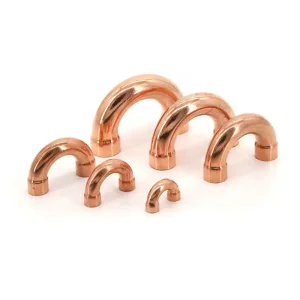
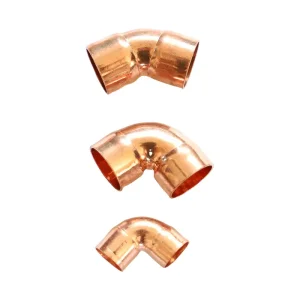
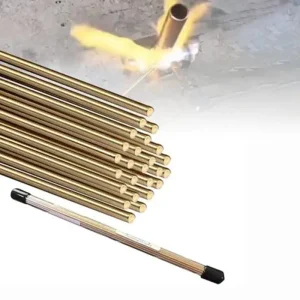
Heavy-duty copper fittings, drier cartridges, and brazing supplies to complete your HVAC assembly line.
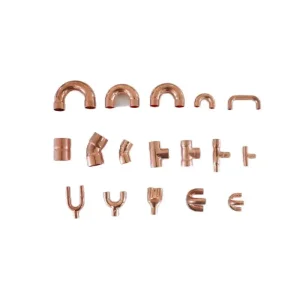
 Taojun