A legacy of manufacturing excellence dating back to 1988.
Located in the highly accessible tourist and industrial coastal city of Xiangshan, Ningbo, the foundation of Taojun Refrigeration is deeply rooted in academic engineering. Originally founded in 1988 as the **Xiangshan Refrigeration Accessories Factory of Zhejiang University**, our development trajectory has always revolved around deep scientific research and advanced metallurgical integrity.
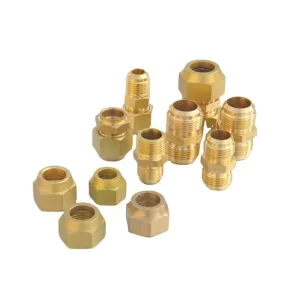
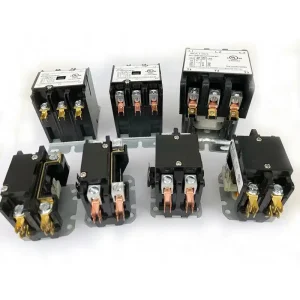
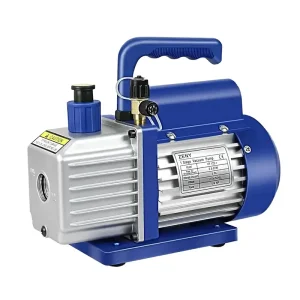
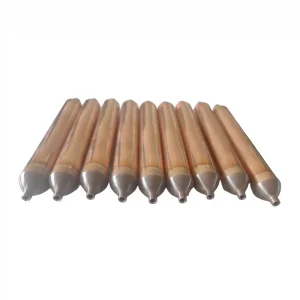
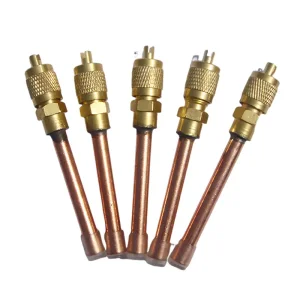
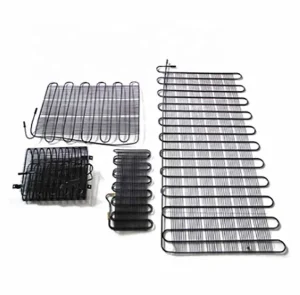
Today, we operate as a national high-tech enterprise, certified under **ISO 9001:2015, EU RoHS, REACH, and US UL** standards. Our products—ranging from high-end copper filter driers, stop valves, and air conditioning access valves to state-of-the-art wire tube condensers and premium steel Bundy tubes—are trusted by Tier-1 household appliance manufacturers including Haier, Midea, Gree, Whirlpool, Electrolux, and Xinfei.
The term "Bundy Tube" refers to a highly specialized class of double-walled, copper-brazed steel tubing that has served as the backbone of high-pressure fluid transfer systems for nearly a century. Developed originally for the automotive sector’s brake lines, its unparalleled vibration resistance, high burst pressure threshold, and thermal conductivity have positioned it as a dominant component in the HVAC and refrigeration sectors globally.
In modern industrial applications, Bundy tubes are categorized primarily into two configurations:
With global environmental policies mandating the phasing out of ozone-depleting substances and high-GWP (Global Warming Potential) hydrofluorocarbons (HFCs) like R134a, the HVAC-R industry has rapidly pivoted toward natural refrigerants, specifically R290 (propane) and R600a (isobutane). These hydrocarbon alternatives operate under unique thermodynamic profiles and carry high flammability risks.
Consequently, the structural integrity of the heat exchanger lines becomes paramount. Bundy tubes manufactured by Taojun undergo 100% inline eddy current detection and high-pressure nitrogen testing up to 500 PSI, ensuring zero leakage of flammable refrigerants, making them the standard choice for modern energy-saving domestic appliances.
Corrosion resistance is the primary benchmark for Bundy tube longevity. Depending on the installation environment, various surface protection configurations are employed:
| Coating Type | Primary Application | Corrosion Resistance (Salt Spray Test) | Environmental Compliance |
|---|---|---|---|
| Copper Coating (Brazed) | Internal refrigerant lines, hermetic compressors | N/A (Primarily internal protective layer) | RoHS & REACH Compliant |
| Electro-Zinc Plating | Standard condensers, domestic refrigerator backs | 72 to 96 Hours (White Rust) | Hexavalent Chromium-Free |
| PVF (Polyvinyl Fluoride) | Underbody automotive brake lines, harsh chemical evaporators | 500 to 1000+ Hours | High chemical & UV resistance |
| Zn-Al Galfan Coating | Heavy-duty commercial outdoor units | 240 to 480 Hours | Excellent galvanic compatibility |
Founded as the Xiangshan Refrigeration Accessories Factory of Zhejiang University in 1988, our product designs are engineered by an in-house R&D center led by academic consultants. We solve complex fluid dynamics and heat-transfer challenges directly at the raw material phase.
Our core production lines incorporate automatic roll-forming, continuous hydrogen-atmosphere annealing furnaces, and high-frequency induction welding equipment sourced from premium German toolmakers. This limits thickness variance to within ±0.02mm.
We deploy dual CCD visual alignment systems, real-time internal pressure monitoring, helium-based mass spectrometer leak detection (sensitivity of 1x10^-9 Pa·m³/s), and rigorous thermal cycling aging tests across 500 consecutive operating hours.
Unlike standard tube manufacturers, Taojun's proprietary continuous heat treatment process utilizes a 100% pure hydrogen reducing gas environment at temperatures reaching 1120°C. This ensures that the copper alloy on the inner and outer surfaces of the double-walled steel strip flows uniformly, forming a flawless metallurgical bond. The resulting tube offers exceptional malleability, enabling clients to bend, coil, and flare the tubing into complex geometries (such as serpentine condensers) without micro-cracking or internal diameter restriction.
Integrated into wire-on-tube condensers, static evaporators, and compressor discharge loops. Tested to withstand up to 150 million cycles of high-frequency compressor vibration.
Meets international automotive specifications (SAE J527, ASTM A254). Coated with multi-layer PVF and zinc to resist highly corrosive de-icing salts and gravel impact on global road infrastructures.
Engineered as heavy-duty heat-dissipation coils in commercial beverage dispensers, ice machines, and localized electrical cabinet cooling systems, operating under high-humidity conditions.
As industrial demands lean heavily toward sustainability and green hydrogen storage systems, the technical specifications for steel tubing are undergoing a rapid evolution. Ningbo Taojun's R&D department has charted a comprehensive technology roadmap focusing on three core initiatives:
Developing ultra-thin-walled steel tubing (down to 0.4mm thickness) to minimize material consumption while maintaining high pressure resistance and boosting thermal exchange efficiency.
Transitioning from traditional solvent-based coating methods to eco-friendly, zero-VOC electrostatic powder deposition, ensuring 100% compliance with upcoming EU chemical bans.
Modifying the chemical structure of raw steel (lowering carbon content to <0.05%) to mitigate hydrogen embrittlement in industrial fuel cell distribution networks.
Integrating IoT-enabled eddy current sensors directly into the manufacturing lines to record dimensional profiles of every millimeter of shipped tube coil.
At Ningbo Taojun, our growth and reputation are anchored on a unified corporate culture. We fully understand that a world-class brand can only be sustained through the continuous integration of four core values:
Equipped with a comprehensive MES (Manufacturing Execution System), we track orders in real-time. Our global logistics networks allow us to deliver custom-shaped and coiled Bundy tube components to key industrial zones in North America, Europe, and Southeast Asia within expedited lead times.
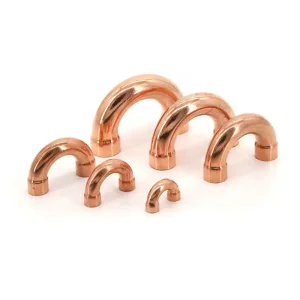
Whether your project requires custom U-bend parameters, complex brazed manifolds, or pre-assembled condenser units, our engineering division offers dynamic CAD-to-prototype transitions in under 72 hours.
Answer: ASTM A254 is the standard specification for double-walled copper-brazed steel tubing. It specifically governs the mechanical properties, dimensional tolerances, and pressure integrity required for Bundy tubes. The raw steel strip must be low-carbon (SPCC, typically carbon content ≤0.08%) to ensure optimal malleability during the 720-degree rolling process. The copper coating acts as the brazing alloy during furnace heating, resulting in a continuous metallurgical bond that offers vastly superior vibration fatigue resistance compared to single-walled high-frequency welded tubes.
Answer: Internal cleanliness is critical for refrigeration performance, as moisture and oxides react with refrigerants to form hydrofluoric acid, leading to compressor failure. Taojun maintains an ultra-dry environment during drawing and annealing. Tubes are annealed in a 100% pure hydrogen reducing atmosphere, which reduces any residual iron oxides back to iron, leaving a clean, bright interior. Post-annealing, the internal tube is flushed with dry nitrogen, and the ends are immediately sealed with plastic caps to guarantee a residual moisture content below 0.02 g/m² and maximum internal residue below 0.15 g/m².
Answer: Bare steel Bundy tubes are highly vulnerable to oxidation. For coastal or high-salinity applications, we recommend our specialized PVF (Polyvinyl Fluoride) coating or Zn-Al Galfan protection. PVF coating provides an impenetrable barrier against moisture, salt fog, and chemical attacks, passing up to 1000 hours of neutral salt spray testing (ASTM B117) without showing red rust. This makes them ideal for marine refrigeration and outdoor mini-split condensers.
Answer: Thanks to our continuous hydrogen-atmosphere annealing process, our tubes retain high elongation properties (typically ≥25%). As a general engineering rule, the minimum bend radius (R) for automated CNC rotary draw bending is 1.5 to 2 times the tube's outer diameter (OD). For example, a 4.76mm OD tube can be safely bent to a radius of 9.5mm without localized wrinkling or wall thinning exceeding 10%, ensuring smooth fluid flow and minimal pressure drop.
Answer: We systematically analyze every batch of raw material using energy-dispersive X-ray fluorescence (EDXRF) spectrometers. Our plating processes utilize trivalent chromium (Cr3+) rather than toxic hexavalent chromium (Cr6+), which is strictly banned under European RoHS directives. Our facility undergoes periodic SGS audits to maintain global certification credentials, guaranteeing seamless entry for your end appliances into European and North American markets.
 Taojun