Choosing a reliable Filter Drier For Fridge supplier requires more than comparing prices or catalog images. A filter drier removes moisture, acid, and debris from the refrigeration circuit. It also protects the compressor and expansion device during daily operation. Small component. Serious consequences.
The IEA’s The Future of Cooling report projects that global cooling demand could more than triple by 2050. This trend increases pressure on manufacturers to improve reliability, efficiency, and serviceability. The UNEP 2023 Cooling Emissions and Policy Synthesis Report also highlights the need for cleaner, more efficient cooling systems. These findings make component quality increasingly important across domestic refrigerators, commercial cabinets, and cold-chain equipment. Supplier evaluation should include desiccant type, shell strength, connection size, pressure rating, refrigerant compatibility, and documented moisture capacity.
This guide reviews ten leading Filter Drier For Fridge suppliers worldwide. It considers manufacturing experience, testing practices, product range, certifications, delivery capability, and technical support. References include IEA cooling research, UNEP policy analysis, and relevant AHRI and ASHRAE technical guidance. However, no ranking is perfect. Laboratory performance may differ inside a humid kitchen, after rough transport, or during repeated compressor cycling. A supplier may look excellent on paper. Real service results still matter.
The best choice depends on the refrigerator design, refrigerant, tubing layout, and maintenance environment. Buyers should verify current specifications directly with manufacturers. Product documents can change. That detail is easy to overlook.
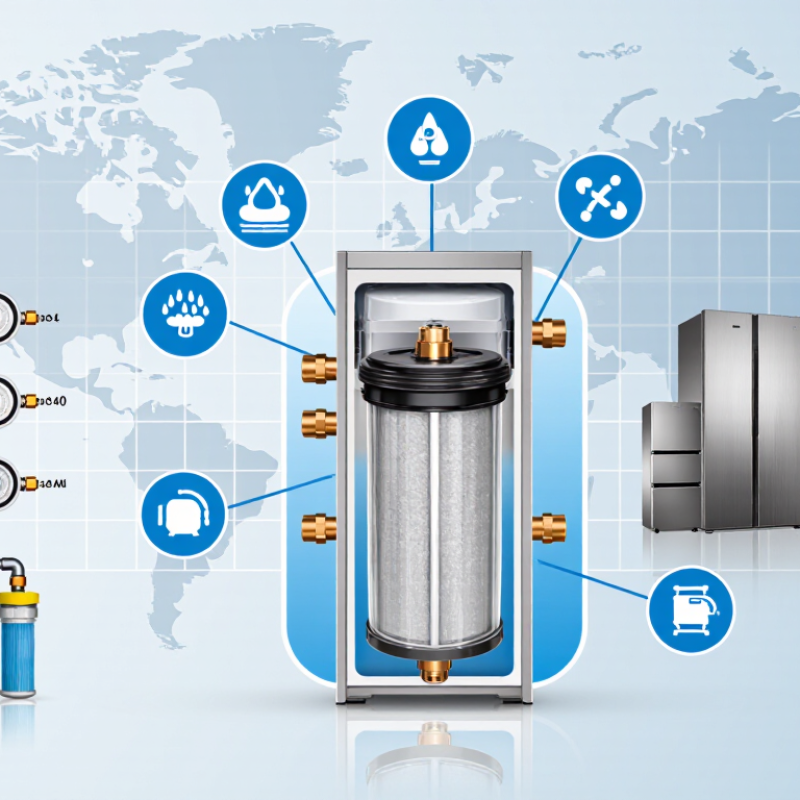
A refrigerator filter drier is a sealed component installed in the liquid line of a refrigeration system. It contains desiccant material that captures moisture, acid, and fine particles. These contaminants may enter during manufacturing, servicing, or exposure to humid air.
Moisture is especially dangerous. At low temperatures, it can freeze near a capillary tube or expansion device. This may cause unstable cooling, pressure changes, or unexpected shutdowns. Acid and debris can also damage compressor windings, valves, and bearings. In field service, a correctly sized drier often protects a repair better than adding more refrigerant. It is easy to overlook this small component.
When comparing worldwide filter drier suppliers, request verified capacity data, pressure ratings, flow direction, and material information. The drier must match the refrigerant, oil, system capacity, and connection size. Installation requires clean tools and minimal exposure to open air. Keep the part sealed until use. Small details matter.
A technician should replace the drier whenever the sealed system is opened. Burnout repairs may require a specialized cleanup drier and a later replacement. A filter drier is not a magic shield. Incorrect sizing, poor brazing, or hidden system contamination can still cause failure. Reviewing these conditions prevents assumptions from becoming another repair.
Choosing among the top 10 filter drier suppliers worldwide requires more than comparing prices. A refrigerator filter drier must control moisture, trap particles, and protect the compressor circuit. I would examine the desiccant type, shell material, connection size, and rated working pressure. Ask for performance data under temperature conditions similar to your refrigerator design. Laboratory figures can look impressive, yet field results may differ.
Supplier experience becomes clearer through production records and sample testing. Request batch traceability, inspection reports, and documented leak-test procedures. A reliable supplier should explain how it controls welding, drying, cleaning, and packaging. Check whether each sample arrives sealed and free from visible dents or loose particles. Small details matter.
Technical support also deserves attention. Can the supplier recommend a suitable capacity for your refrigerant and system volume? Does it respond with practical drawings and test evidence? Evaluate delivery stability, minimum order quantities, replacement handling, and communication quality. A factory audit or video inspection can reveal process discipline, but it cannot replace independent testing. I have seen low quotations hide inconsistent dimensions and delayed corrections. That is a useful warning, not a universal rule. No supplier is perfect. The strongest candidate is the one that admits limitations, documents corrective action, and keeps product quality consistent across repeated orders.
Top 10 Filter Drier Suppliers for Fridge Applications Worldwide
The leading ten suppliers serve domestic, commercial, and transport refrigeration markets. Supplier One focuses on compact copper-shell driers for household refrigerators. Supplier Two provides high-capacity models for supermarket systems. Supplier Three specializes in low-temperature applications. Supplier Four offers driers with strong moisture absorption. Supplier Five supports custom inlet and outlet designs. Supplier Six produces models for modern low-global-warming refrigerants. Supplier Seven emphasizes automated production and stable dimensions. Supplier Eight supplies replacement parts through regional warehouses. Supplier Nine develops vibration-resistant driers for mobile cooling equipment. Supplier Ten provides small-batch solutions for appliance manufacturers.
Performance depends on more than supplier size. Engineers should check refrigerant compatibility, working pressure, desiccant type, filtration rating, and connection diameter. A reliable supplier shares pressure-test records and material traceability. Clear batch coding also helps technicians locate defects quickly. Copper joints should remain clean and dry before brazing. Small contamination can damage a compressor.
Field technicians often prefer driers with consistent flow resistance. Packaging matters too. A sealed bag protects the desiccant during storage. Some suppliers provide detailed installation guidance, but not all instructions are equally practical. That remains a weakness. Buyers should request sample testing before approving large orders. Climate, transport time, and storage humidity can change real performance. A ranking can still mislead when prices hide shorter service life. The strongest suppliers combine laboratory data with dependable technical support.
| Rank | Supplier Profile | Primary Supply Region | Typical Refrigerator Applications | Common Refrigerant Compatibility | Typical Desiccant Configuration | Common Connection Sizes | Typical Quality Documentation |
|---|---|---|---|---|---|---|---|
| 1 | Profile A — High-Volume OEM Supplier | East Asia and global export markets | Household refrigerators, freezers, upright freezers, and chest freezers | R600a, R134a, R290, and selected HFO blends subject to product approval | Molecular sieve, commonly 3A or 4A, with optional activated alumina | 1/4 in, 5/16 in, and 3/8 in copper tube connections | Dimensional inspection, leak testing, moisture-capacity data, and batch traceability |
| 2 | Profile B — Refrigeration Component Specialist | Europe and surrounding export markets | Domestic refrigeration, compact cooling equipment, and replacement service parts | R600a, R134a, R290, and other approved low-GWP refrigerants | High-capacity molecular sieve with optional particulate filtration | 1/4 in, 5/16 in, and metric copper tube sizes | Material certificates, pressure-test records, RoHS documentation, and production inspection reports |
| 3 | Profile C — Private-Label Manufacturing Supplier | China, Southeast Asia, and international OEM markets | Refrigerator assembly lines, private-label appliances, and aftermarket distribution | R600a and R134a; R290 versions available for approved designs | Solid-core molecular sieve, with multiple desiccant charge options | 1/4 in and 5/16 in inlet and outlet tubes | Incoming-material inspection, brazing inspection, leak testing, and lot coding |
| 4 | Profile D — North American Replacement-Part Supplier | North America and Latin American markets | Household refrigerators, service replacements, and light commercial refrigeration | R134a, R600a, R290, and legacy refrigerants where legally permitted | Molecular sieve cartridges with optional activated carbon or alumina filtration | 1/4 in, 5/16 in, and 3/8 in connections | Pressure rating, flow-direction marking, leak-test results, and packaging identification |
| 5 | Profile E — Compact Appliance Component Supplier | South Asia and Middle East export markets | Mini refrigerators, beverage coolers, compact freezers, and small appliances | R600a, R134a, and R290 subject to application and safety requirements | 3A molecular sieve optimized for moisture removal in small systems | 1/4 in and 5/16 in copper tube connections | Basic dimensional reports, moisture-control records, leak testing, and visual inspection |
| 6 | Profile F — Large-Appliance OEM Supplier | Europe, Türkiye, and Central Asian markets | Full-size refrigerators, bottom-freezer units, and side-by-side appliances | R600a and R134a; selected low-GWP alternatives according to appliance design | High-volume molecular sieve cores with anti-migration construction | 5/16 in, 3/8 in, and metric tube connections | Process-control plans, brazing quality records, pressure testing, and traceability documentation |
| 7 | Profile G — Low-GWP Refrigerant Specialist | Global markets with strong low-GWP adoption | R290 refrigerators, hydrocarbon systems, and energy-efficient appliance platforms | R290, R600a, and other approved hydrocarbon refrigerants | High-purity molecular sieve selected for low residual moisture | 1/4 in, 5/16 in, and 3/8 in copper connections | Refrigerant compatibility data, leak testing, cleanliness controls, and safety documentation |
| 8 | Profile H — Aftermarket Service Supplier | Worldwide distribution through refrigeration-service channels | Replacement repairs for domestic refrigerators, freezers, and display coolers | R134a, R600a, R290, and commonly serviced refrigerants | Universal molecular sieve cores in several shell lengths and capacities | 1/4 in and 5/16 in connections; adapters may be available | Product labeling, installation instructions, flow-direction marking, and batch identification |
| 9 | Profile I — Custom Engineering Supplier | Japan, South Korea, and specialized global markets | Customized refrigerator platforms, high-efficiency systems, and engineering prototypes | R600a, R134a, R290, and application-specific refrigerants after validation | Custom molecular sieve blend, optional filter screen, and application-specific charge | Custom copper tube diameter, length, and orientation | Engineering drawings, validation reports, material data, and controlled change documentation |
| 10 | Profile J — Regional Refrigeration Parts Supplier | Latin America, Africa, and regional emerging markets | Domestic refrigerators, freezers, beverage coolers, and general service applications | R134a, R600a, and R290 versions depending on local regulations | Standard molecular sieve core with optional particulate filter layer | 1/4 in, 5/16 in, and metric connection options | Basic product specifications, leak-test confirmation, packaging details, and lot coding |
Comparing ten global filter drier suppliers requires more than checking price and delivery time. Product design varies by refrigerant, system pressure, and compressor type. Some suppliers offer solid-core driers for moisture removal. Others provide replaceable-core housings for larger commercial systems. Bi-directional models support heat-pump operation, but only when internal flow design is suitable. Shell materials also differ. Copper-plated steel, stainless steel, and coated steel handle corrosion risks differently.
Capacity claims need careful examination. Ask for moisture adsorption data, acid-removal performance, pressure ratings, and test conditions. The AHRI Directory and relevant ASHRAE guidance can help verify technical claims. ISO 9001 certification indicates controlled quality processes, but it does not guarantee excellent field performance. Environmental systems also deserve attention. The International Energy Agency reports that cooling energy demand could more than triple by 2050. Reliable filtration will become more important as systems operate under changing refrigerants and efficiency targets.
Tips: Request batch traceability and sample test reports. Check compatibility with the exact refrigerant and oil. Confirm factory leak testing, packaging protection, and shelf-life controls. Service quality separates suppliers sharply. Strong suppliers provide selection tools, installation guidance, replacement recommendations, and responsive engineering support. Some offer impressive certificates but weak documentation. That gap matters. I would not judge reliability from certification alone. Field feedback, failure analysis, and consistent delivery records often reveal more. A cheaper drier can become expensive after moisture, acid, or restricted-flow problems appear.
Choosing a filter drier supplier requires more than comparing unit prices. In field service, I have seen a cheap drier cause repeated restrictions after moisture entered a repaired system. Start with application data: refrigerant type, system capacity, working pressure, connection size, and installation direction. The supplier should explain why its desiccant blend fits your equipment. Ask for pressure-drop data at realistic flow rates. Small details matter. A drier that looks suitable may be undersized.
Evaluate manufacturing control, not polished sales language. Reliable suppliers can provide material certificates, batch numbers, moisture-capacity data, and documented leak-test results. Check whether copper tubes are clean, capped, and protected from humidity before installation. Ask how rejected units are handled. This reveals process discipline. Independent testing or recognized quality systems can strengthen confidence, but certificates alone are not proof of field performance. Request samples and inspect brazed joints, caps, labels, and packaging. Record your findings.
Communication is another practical test. A capable technical team should answer application questions clearly and flag unsafe assumptions. Confirm lead times, minimum order quantities, warranty terms, and replacement procedures in writing. For export purchases, verify consistent specifications across production batches. I would compare two or three suppliers using the same checklist. My own mistake was trusting a familiar specification without checking actual operating pressure. That oversight delayed a repair and cost more than the original price difference. Leave room for review after the first shipment: measure pressure drop, inspect returned parts, and update your supplier score.
Global warming potential (GWP) is one practical reference when comparing filter drier options for refrigeration systems. A suitable supplier should also confirm refrigerant compatibility, working pressure, connection size, desiccant type, moisture capacity, and safety requirements.
Reference: 100-year GWP values based on widely used IPCC AR4 refrigerant data.
They support household, commercial, and transport refrigeration systems. Compact models suit home refrigerators. Larger units serve supermarket equipment.
Confirm refrigerant type, system capacity, working pressure, connection diameter, installation direction, and desiccant type. A suitable-looking drier may be undersized.
The drier’s materials and desiccant must suit the refrigerant and operating conditions. Incorrect matching can increase restriction or reduce moisture control.
Request material certificates, batch numbers, pressure-test records, moisture-capacity data, and leak-test results. Traceability matters during repairs.
Examine samples before approving large orders. Check clean copper tubes, sealed caps, labels, brazed joints, and protective packaging.
A sealed bag helps protect the desiccant from storage humidity. Moisture can enter before installation and reduce service life.
Keep copper joints clean and dry before brazing. Follow the correct flow direction. Small contamination can damage a compressor.
Not always. A cheaper drier may cause repeated restrictions or shorter service life. I once trusted a familiar specification and missed the actual pressure requirement.
Use the same checklist for two or three suppliers. Compare pressure drop, lead time, order quantity, warranty terms, and replacement procedures.
Measure pressure drop and inspect returned parts. Record defects and update the supplier score. The review may reveal assumptions that looked reasonable earlier.
A refrigerator filter drier is a small but essential component in the refrigeration system. It removes moisture, acids, dirt, and other contaminants from the refrigerant circuit, helping protect the compressor, expansion device, and internal tubing. Choosing a reliable Filter Drier For Fridge can improve cooling performance, reduce maintenance risks, and extend equipment service life. This article explains how filter driers work and why their quality matters in domestic, commercial, and industrial refrigerator applications.
It also presents a practical approach to evaluating global suppliers based on filtration efficiency, compatibility, material quality, production consistency, certifications, testing procedures, delivery capability, and technical support. The comparison highlights differences in product size, connection types, desiccant design, customization options, warranty policies, and after-sales service. By considering system requirements, operating conditions, purchasing volume, and supplier reliability, buyers can select a suitable filter drier supplier that provides stable performance, dependable quality, and long-term value.
Taojun