Top 10 HVAC Filter Drier Suppliers Worldwide?

Time:2026-10-08 Author:Charlotte
0%

Choosing a Filter Drier For Hvac supplier is more technical than comparing prices. A dependable unit protects compressors from moisture, acid, wax, and installation debris. Its small steel shell can prevent expensive failures inside a larger system.

The International Energy Agency reports that global cooling demand could more than triple by 2050 if efficiency improves slowly. The U.S. Department of Energy also identifies heating and cooling as nearly half of household energy use. These figures raise the importance of clean, stable refrigeration circuits. Filter driers are not decorative components.

“Filter-driers are cheap insurance against system contamination,” says Bill Chase, a technical support manager associated with Parker Sporlan. That practical view remains relevant during supplier evaluation. Strong manufacturers should demonstrate compatible refrigerant ratings, pressure-drop data, desiccant performance, factory testing, and traceable quality systems. Certifications matter, but they do not replace field experience.

This Top 10 HVAC Filter Drier Suppliers Worldwide overview considers product breadth, global distribution, technical documentation, custom support, and reputation among contractors and OEMs. It does not treat market visibility as proof of superior performance. Supplier rankings can change quickly. That deserves more attention.

Some companies excel in large commercial systems. Others serve replacement markets with broader availability. The best choice depends on refrigerant, capacity, connection size, operating pressure, and service conditions. A filter drier selected from a catalogue may still fail when application details are overlooked. That is the uncomfortable part. Supplier comparison should begin with engineering evidence, not marketing language.
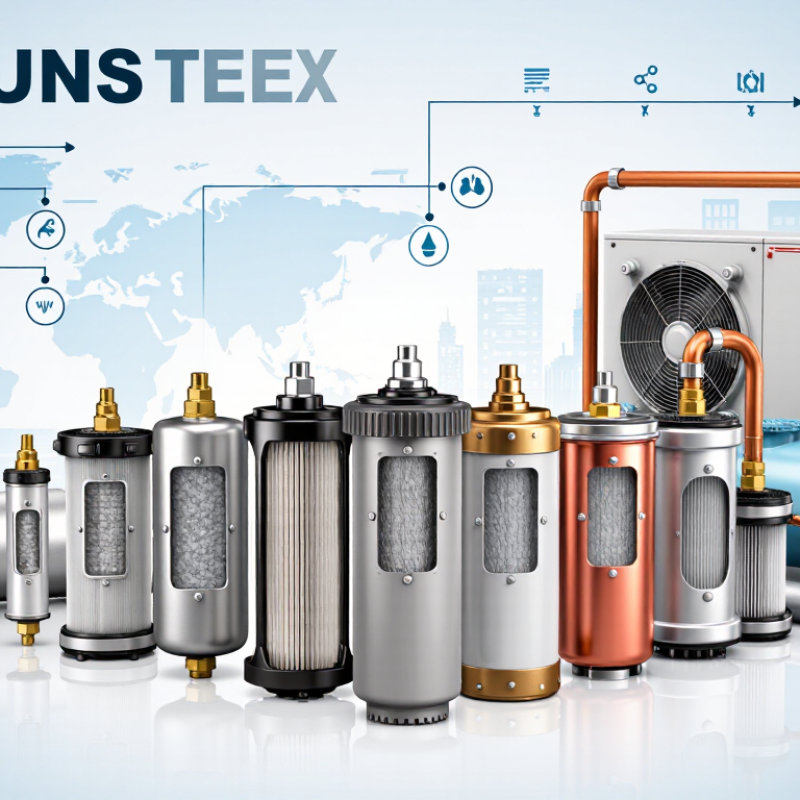
Top 10 HVAC Filter Drier Suppliers Worldwide?

HVAC Filter Drier Scope: Desiccant, Acid, Moisture, and Debris Control

Top 10 HVAC Filter Drier Suppliers Worldwide

HVAC Filter Drier Scope: Desiccant, Acid, Moisture, and Debris Control

HVAC filter driers protect refrigeration circuits from four persistent threats: moisture, acid, desiccant loss, and solid debris. Reliable suppliers should explain how each product controls these risks, not merely publish flow-rate figures. In field service, a small moisture reading can predict ice formation at the expansion device. That detail matters. Product selection starts with system size, refrigerant compatibility, pressure rating, and the expected contamination load.

Desiccant capacity is only one measure. A strong core captures water while limiting pressure drop during normal operation. Acid-control models are valuable after compressor burnout, when oil and refrigerant may carry corrosive compounds. Moisture indicators add a practical visual check near the liquid line. Fine filtration helps retain copper particles, welding residue, and other debris before they reach sensitive valves. However, no drier fixes poor evacuation. Technicians still need clean tubing, measured vacuum levels, and careful brazing practices.

When comparing global suppliers, buyers should examine test documentation, batch traceability, connection options, and replacement guidance. Technical support also reveals competence. Can the supplier recommend a shell size for a five-ton system? Can it explain disposal and replacement intervals? These answers are more useful than polished catalog language. I have seen oversized driers installed as a shortcut. They worked, but the added pressure drop was easy to overlook. That was not a perfect decision. Reviewing operating conditions afterward often exposes assumptions that should have been checked earlier.

Top 10 HVAC Filter Drier Suppliers Worldwide? — Supplier-Neutral Scope Map

HVAC filter driers combine desiccant media and filtration elements to manage refrigerant moisture, acid by-products, and solid debris. The index below represents the relative functional emphasis of each control area in standard filter-drier applications; it is not a supplier ranking or market-share estimate.

Scope index: 4 = primary design purpose, 3 = major supporting function, 2 = application-dependent function. Desiccant media provide moisture adsorption and can support acid control, while filtration elements capture debris and installation or wear particles.

Technical Basis: ASHRAE Refrigeration Data, AHRI 700, and UL 207

Top 10 HVAC Filter Drier Suppliers Worldwide?

Selecting a leading HVAC filter drier supplier requires more than comparing catalog prices. Experienced technicians examine refrigerant compatibility, moisture capacity, pressure drop, and shell strength. ASHRAE Refrigeration Data provides practical guidance on refrigerant behavior, system temperatures, and acceptable operating conditions. These details help engineers match the drier to the actual system, not a generic application.

Purity also matters. AHRI 700 defines quality requirements for refrigerants, including limits for moisture, acidity, chlorides, and non-condensable gases. A reliable supplier should provide traceable test data and clear compatibility statements. The drier must also suit the refrigerant, oil, connection type, and expected flow rate. Small details matter.

Safety cannot be treated as paperwork. UL 207 addresses refrigerant-containing components and pressure-related construction. Qualified products should show appropriate ratings, tested materials, and consistent production controls. In field inspections, I have seen oversized driers create unnecessary pressure loss, while undersized units saturated too quickly. Bigger is not always better. Supplier rankings should therefore consider laboratory evidence, technical support, batch consistency, and real installation feedback. One weakness remains: published data may not reflect every climate or cycling pattern. Independent verification is still wise.

Ranking Criteria: Capacity, Pressure Ratings, Compliance, and Global Reach

A credible worldwide ranking of HVAC filter-drier suppliers should begin with measurable engineering data, not advertising claims. Capacity must be compared under stated refrigerants, flow rates, and pressure drops. AHRI Standard 710 provides a recognized framework for liquid-line filter-drier performance testing. Suction-line products require different evaluation methods. Mixing these categories creates misleading results.

Pressure ratings deserve equal attention. A product may handle high working pressure but fail under temperature cycling, vibration, or moisture loading. Reviewers should verify burst pressure, maximum operating pressure, connection size, and temperature limits. Compliance with standards such as UL 207, EN 378, and ISO 5149 can indicate stronger technical control. The IEA’s The Future of Cooling report expects global cooling energy demand to more than triple by 2050. That growth increases the need for dependable components and wider service networks.

Tips: Compare certified test data, not catalog capacity alone. Check refrigerant compatibility and replacement availability in each region. A supplier with warehouses on three continents may still provide slow technical support. Global reach is useful, but local training and documented traceability matter more. Ranking remains imperfect when suppliers publish different test conditions. That limitation should be stated clearly. UNEP’s 2022 Scientific Assessment also reinforces the industry’s shift toward lower-impact refrigerants, making future compatibility an important ranking factor.

Top 10 Supplier Profiles: Product Lines, Refrigerant Coverage, and Test Data

Global HVAC filter drier suppliers now compete on verified performance, not catalog size alone. The International Energy Agency reports that space cooling demand could triple by 2050. That growth increases demand for reliable moisture and acid control. Our top ten supplier profiles compare solid-core, replaceable-core, bi-flow, and suction-line product families. They also examine shell materials, connection sizes, and service access.

Refrigerant coverage is a practical dividing line. Strong suppliers publish compatibility for legacy HFCs, lower-GWP HFO blends, hydrocarbons, and carbon dioxide systems. However, coverage statements need careful checking. Pressure ratings, oil compatibility, and A2L application notes may differ between product families. The UNEP Ozone Secretariat’s latest technology assessments reinforce this shift toward lower-GWP refrigerants. A familiar fitting does not guarantee safe application.

Test data deserves equal attention. Profiles should record water-capacity values, acid-removal results, pressure drop, flow rate, and maximum working pressure. ASHRAE Standard 63.2 provides a recognized method for testing liquid-line filter driers. Independent laboratory reports are stronger than unsupported marketing claims. Field experience also matters: a clean installation, correct brazing, and nitrogen purging often decide service life. One weakness remains. Published data may use different refrigerants, temperatures, and test conditions, making direct comparison imperfect. Buyers should request the original test method, not only a headline number.

Top 10 HVAC Filter Drier Suppliers Worldwide? - Top 10 Supplier Profiles: Product Lines, Refrigerant Coverage, and Test Data

Rank Supplier Profile Primary Product Lines Connection Formats Refrigerant Coverage Desiccant / Filtration Configuration Typical Working-Pressure Classes Representative Test Data Typical Applications
1 Profile A — Global OEM-Grade Line Bi-flow liquid-line driers, replaceable-core shells, solid-core driers, suction-line filters Flare, sweat, O-ring, and threaded connections; approximately 1/4 to 1-5/8 in nominal sizes R-134a, R-404A, R-407C, R-410A, R-448A, R-449A, R-32; hydrocarbon compatibility requires model-specific approval Molecular sieve with activated alumina; optional particulate screens on both flow paths Approximately 3.0 to 4.5 MPa maximum working pressure, depending on model Shell leak testing, pressure proof testing, burst-pressure qualification, moisture-capacity verification, and flow-restriction testing Packaged air-conditioning systems, heat pumps, commercial refrigeration, and transport refrigeration
2 Profile B — High-Pressure Heat-Pump Line High-pressure liquid-line driers, bi-directional heat-pump driers, compact shell driers Brazed copper and steel connections; approximately 6 to 42 mm tube compatibility R-410A, R-32, R-454B, R-452B, R-407C, and other A1 or A2L refrigerants where specifically approved High-capacity molecular sieve blends; anti-migration construction for reversing systems Approximately 4.0 to 4.7 MPa maximum working pressure, depending on refrigerant and design Helium or nitrogen leak testing, hydrostatic or pneumatic proof testing, burst testing, and bi-directional pressure-drop testing Residential heat pumps, variable-speed systems, rooftop units, and reversible refrigeration circuits
3 Profile C — Commercial Refrigeration Line Liquid-line filter driers, suction-line filters, burnout-cleanup driers, and cores for shell assemblies Sweat, solder, and replaceable-core connections from small capillary sizes to large commercial piping R-404A, R-507A, R-448A, R-449A, R-134a, R-513A, and selected lower-GWP blends Molecular sieve, activated alumina, and carbon-based cleanup cores for acid and wax removal Approximately 2.8 to 4.5 MPa maximum working pressure Moisture adsorption testing, acid-removal testing, particulate-retention testing, pressure-drop measurement, and shell leak testing Supermarket racks, cold rooms, display cases, condensing units, and food-service refrigeration
4 Profile D — OEM Compact-System Line Compact bead driers, molded-core driers, capillary-tube driers, and small liquid-line assemblies Small copper tube, flare, and brazed connections; commonly 1/4 to 3/8 in R-134a, R-600a, R-290, R-32, and selected HFO or HFO/HFC blends subject to safety approval High-surface-area molecular sieve beads or compact molded desiccant cores Approximately 2.0 to 4.0 MPa maximum working pressure, depending on appliance category Leak testing, vibration testing, moisture-capacity testing, capillary-flow verification, and burst testing Domestic refrigerators, freezers, beverage coolers, compact chillers, and small heat pumps
5 Profile E — A2L-Ready Product Line Filter driers for mildly flammable refrigerants, bi-flow driers, and factory-installed assemblies Brazed, flare, and press-fit connections with model-specific installation requirements R-32, R-454A, R-454B, R-454C, R-452B, and conventional HFC refrigerants where listed Non-reactive molecular sieve formulations with internal screens and low-spark-risk construction Approximately 3.0 to 4.5 MPa maximum working pressure Leak-rate testing, pressure proof testing, burst testing, vibration testing, and compatibility review for A2L refrigerants New residential air conditioners, heat pumps, light commercial systems, and packaged units
6 Profile F — Replaceable-Core Service Line Steel filter shells, replaceable liquid-line cores, suction filters, and cleanup cartridges Flanged and threaded shell connections; commonly 3/8 to 2-1/8 in line sizes R-22 service replacements, R-134a, R-404A, R-407C, R-410A, R-448A, and R-449A where permitted Universal cores, high-acid-removal cores, high-water-capacity cores, and particulate-removal cores Approximately 2.8 to 4.5 MPa maximum working pressure Core bypass verification, pressure-drop testing, acid-neutralization testing, moisture adsorption testing, and shell pressure testing Field service, system retrofit, compressor burnout cleanup, and large commercial refrigeration
7 Profile G — Automotive and Mobile HVAC Line Compact liquid-line driers, accumulator-driers, desiccant bags, and receiver-drier assemblies Aluminum, steel, crimp, block, and O-ring connections R-134a, R-1234yf, and selected CO₂ or electric-compressor applications subject to system design Molecular sieve desiccant with particulate filtration and oil-compatible internal materials Approximately 2.5 to 4.0 MPa maximum working pressure Helium leak testing, vibration and thermal-cycle testing, moisture-capacity verification, and burst-pressure testing Passenger vehicles, buses, trucks, agricultural equipment, and mobile refrigeration
8 Profile H — Natural-Refrigerant Product Line Driers for hydrocarbons, CO₂-compatible filter assemblies, and compact refrigeration driers Brazed copper, stainless-steel, and compact O-ring connections R-290, R-600a, R-744, and selected HFO or HFC refrigerants with explicit model approval Molecular sieve formulations selected for low-temperature stability and refrigerant-oil compatibility Approximately 3.0 to 14.0 MPa maximum working pressure; CO₂ models require substantially higher ratings High-pressure proof and burst testing, leak testing, thermal cycling, moisture adsorption, and material compatibility testing Commercial refrigeration, bottle coolers, heat pumps, vending equipment, and transcritical CO₂ systems
9 Profile I — Industrial and Process-Cooling Line Large-diameter driers, suction filters, oil-separation support filters, and custom shell assemblies Flanged, welded, threaded, and brazed connections from approximately 1/2 to 4-1/8 in R-134a, R-404A, R-407C, R-410A, R-507A, R-717, R-744, and other refrigerants subject to pressure-category approval High-flow particulate filtration, replaceable cores, activated alumina, and molecular sieve combinations Approximately 2.5 to 14.0 MPa maximum working pressure, depending on refrigerant and shell design Weld inspection, pressure proof testing, burst testing, flow-capacity testing, leak testing, and corrosion evaluation Industrial chillers, process cooling, cold storage, marine refrigeration, and large compressor systems
10 Profile J — Regional Custom and Private-Label Line Standard liquid-line driers, customized dimensions, private-label assemblies, and replacement components Flare, sweat, threaded, and application-specific fittings Common HFC and HFO blends, including R-134a, R-404A, R-407C, R-410A, R-448A, R-449A, and R-32 where listed Standard molecular sieve cores, mixed desiccant fillings, and optional particulate screens Approximately 2.5 to 4.5 MPa maximum working pressure, subject to the approved model Routine leak testing, proof-pressure testing, dimensional inspection, desiccant filling verification, and sample burst testing Replacement parts, split air conditioners, light commercial equipment, cold rooms, and OEM contract production

Note: Refrigerant approval, maximum working pressure, connection size, and test values are model-specific. The listed ranges represent commonly documented industry specifications and should be verified against the applicable technical datasheet, regional pressure-equipment requirements, and the equipment manufacturer’s installation instructions.

Comparison Matrix: Water Capacity, Pressure Drop, Service Life, and Warranty

Top 10 HVAC Filter Drier Suppliers Worldwide?

A useful comparison matrix should measure more than purchase price. Water capacity shows how much moisture the drier can capture under tested conditions. Ask whether values are reported at the same temperature and refrigerant conditions. Otherwise, the figures may look precise but remain difficult to compare.

Pressure drop matters during commissioning. A drier with excessive resistance can reduce system efficiency and affect compressor performance. Check pressure-drop data at several flow rates, not only at the rated point. Service life depends on moisture load, contamination, vibration, and system cleanliness. Field experience suggests that installation quality often matters as much as the component itself. Warranty length adds confidence, but review exclusions, replacement procedures, and labor coverage carefully. A long warranty is not automatically strong protection.

Tips: Build one matrix for all ten suppliers. Record water capacity, pressure drop, expected service life, warranty duration, test conditions, and technical support response time. Request laboratory reports and installation guidance. Keep evidence, not promises. Compare equivalent sizes and refrigerant applications. Also, note uncertainty. Some service-life estimates rely on controlled testing rather than demanding field conditions. That limitation should be visible in the matrix. I have seen technically impressive products perform poorly after rushed brazing and inadequate evacuation. The comparison should reflect that uncomfortable reality.

FAQS

What does an HVAC filter drier control?

It controls moisture, acid, desiccant particles, and solid debris inside refrigeration circuits. Small moisture levels can later form ice near the expansion device.

Why is desiccant capacity important?

Desiccant captures water from the system. However, capacity alone is not enough. Pressure drop and filtration performance also need review.

When should an acid-control drier be considered?

Consider one after compressor burnout. Oil and refrigerant may carry corrosive compounds afterward. Replacement timing still requires careful evaluation.

What debris can a filter drier remove?

Fine filtration can retain copper particles, welding residue, and other solid debris. These particles might otherwise reach valves or other sensitive components.

Can a filter drier replace proper evacuation?

No. It cannot correct poor evacuation. Technicians still need clean tubing, measured vacuum levels, and careful brazing practices.

How should buyers choose the correct drier size?

Check system capacity, refrigerant compatibility, pressure rating, connection size, and contamination load. A five-ton system may need specific shell guidance.

Why can an oversized drier be a poor choice?

An oversized drier may work, but it can create unnecessary pressure drop. The shortcut may hide an assumption worth checking later.

What test information should suppliers provide?

Request water capacity, acid-removal results, pressure drop, flow rate, and maximum working pressure. Ask for the original test method.

Why is refrigerant compatibility difficult to judge?

Compatibility can differ by product family. Pressure ratings, oil compatibility, and application notes may not match familiar fittings. Check twice.

Why are supplier comparisons sometimes imperfect?

Tests may use different refrigerants, temperatures, and conditions. Headline figures can mislead. Field installation quality also affects service life.

Conclusion

This guide evaluates the top global suppliers of Filter Drier For Hvac systems, focusing on how their products manage moisture, acid, contaminants, and debris within refrigeration and air-conditioning circuits. It explains the technical foundation behind product selection, including desiccant performance, compatibility with common refrigerants, pressure ratings, and testing principles aligned with recognized refrigeration data, AHRI 700, and UL 207 requirements.

The comparison considers practical factors such as water capacity, pressure drop, service life, corrosion resistance, installation flexibility, warranty coverage, and international distribution capabilities. Each supplier profile is assessed by product range, refrigerant coverage, operating limits, and available test data rather than brand reputation alone. By combining performance specifications with compliance and service considerations, the article helps contractors, engineers, and purchasing teams identify reliable filter driers for different HVAC applications, system sizes, and maintenance conditions.


Charlotte

Charlotte

Charlotte is a seasoned marketing professional with a deep understanding of the company's portfolio and a passion for elevating its presence in the market. With a keen eye for detail and a commitment to excellence, she ensures that our professional blog is regularly updated with insightful articles......