Choosing the right Filter Drier Aircond is a small decision with major consequences. Moisture, acid, wax, and installation debris can damage compressors and expansion devices. A correctly selected drier helps protect the entire refrigeration circuit.
HVAC service expert Michael J. Proctor states, “A filter drier must control contamination without creating harmful pressure drop.” This practical principle guides the selection process. Match the drier with the refrigerant, oil type, system capacity, connection size, and expected operating temperature. Check the manufacturer’s data, not only the label. A larger shell is not automatically better.
Field experience also matters. A technician may find a clean-looking system containing hidden moisture after brazing. A small sight glass can reveal changing conditions, but it cannot replace proper evacuation and leak testing. Select a bi-flow model for reversible systems. Use a burnout-rated drier after a severe compressor failure. Replace it after cleanup, rather than leaving it indefinitely.
There is no perfect choice.
Even experienced technicians can overlook pressure drop during partial-load operation. That mistake may appear harmless during startup, then reduce cooling performance later. Installation direction, brazing technique, and storage conditions also affect results. This guide explains how to compare Filter Drier Aircond options carefully, verify technical specifications, and avoid common selection errors. It focuses on practical evidence, manufacturer guidance, and service conditions—not guesswork.
What a Filter Drier Does in an Air Conditioning System
How to Choose the Right Filter Drier for Aircond
What a Filter Drier Does in an Air Conditioning System
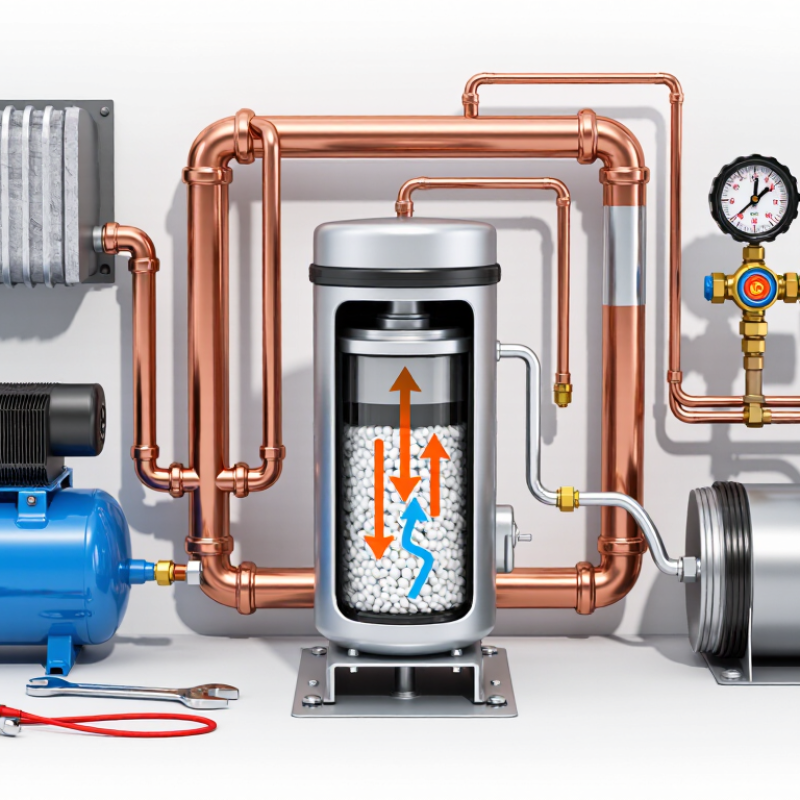
A filter drier protects an air conditioning system from hidden contamination. It removes moisture, acid, and small solid particles from the refrigerant circuit. Moisture can freeze near the expansion device. It can also react with refrigerant oil and create damaging acids. The drier’s desiccant traps this moisture before it reaches sensitive components. Its filter section captures debris from installation, wear, or compressor failure.
In service work, the correct location matters. A standard drier usually sits in the liquid line, before the metering device. Its arrow must follow refrigerant flow. A reversed installation can restrict operation or reduce protection. For heat pump systems, use a drier designed for changing flow direction. That detail is easy to miss.
Selection should match the refrigerant, system capacity, connection size, and expected pressure drop. Check the manufacturer’s technical data, not only the pipe diameter. A larger drier is not automatically better. It may hold more contamination, but it can also add unnecessary resistance. After installation, technicians should inspect for leaks, evacuate the system properly, and verify operating pressures and temperature differences.
A common mistake is replacing a drier without finding the cause of contamination. Compressor burnout, poor brazing, or an open system can quickly overload a new drier. That approach feels efficient, but it often is not. Clean work, dry tools, and a measured evacuation create better protection than size alone.
Assessing Refrigerant Type, Capacity, and System Requirements
Choosing the right filter drier for an air conditioner starts with the refrigerant. The drier must be chemically compatible with the refrigerant, compressor oil, and system materials. Different refrigerants may require different desiccant types, seals, and pressure ratings. In field inspections, a mismatched drier can cause restriction, poor cooling, or repeated moisture problems. That symptom is easy to misread.
Capacity matters too. Match the drier with the system’s cooling capacity, not only the pipe diameter. Check the manufacturer’s rated capacity, connection size, maximum working pressure, and expected pressure drop. Consider line length, outdoor temperature, compressor type, and moisture load. A small drier may restrict flow. An oversized model is not automatically safer. Its internal volume must still suit the circuit. I would also verify the rating at actual operating conditions, because catalog values can seem clearer than they are.
Tips: Read the technical datasheet before installation. Use a drier approved for the specific refrigerant and oil combination. Replace it after major circuit repairs or prolonged exposure to air. Keep the new component sealed until needed. During brazing, protect the tubing with dry nitrogen when procedures require it. Check for leaks and confirm stable operating pressures after startup. A final temperature check across the drier can reveal an unexpected restriction.
How to Choose the Right Filter Drier for Air Conditioning
Assess refrigerant type, system capacity, pressure rating, moisture-control needs, and installation requirements before selecting a filter drier.
1. Confirm Refrigerant Compatibility
Select a drier whose desiccant, seals, and shell materials are approved for the refrigerant and oil used. A2L and A3 refrigerants also require components suitable for flammable refrigerants.
2. Match Capacity and Pressure
Use the manufacturer’s capacity table for the actual refrigerant, evaporating temperature, condensing temperature, and allowable pressure drop. Do not size a drier by connection diameter alone.
3. Check System Requirements
Consider moisture exposure, acid contamination, retrofit conditions, bi-directional flow, service access, and the system’s maximum working pressure before installation.
The chart shows approximate 100-year global warming potential values commonly used for refrigerant comparison: R-290 ≈ 3.3, R-32 ≈ 675, R-454B ≈ 466, R-134a ≈ 1,430, and R-410A ≈ 2,088. GWP is an environmental reference, not a substitute for pressure, compatibility, and capacity checks.
Choosing the Correct Connection Size and Installation Format
Choosing the correct filter drier starts with connection geometry, not cabinet size. Measure the actual liquid-line outside diameter with calipers. Do not trust a catalog’s nominal label. A 3/8-inch port and a 10 mm tube may look similar, yet they require different fittings. Mismatched connections create turbulence, leakage risk, and avoidable pressure loss. Fit matters. AHRI Standard 710 evaluates liquid-line filter driers by water capacity, flow capacity, and pressure drop. Select a model whose rated flow exceeds the system’s design load. Keep its connection size equal to the refrigerant line whenever possible.
Installation format must follow system direction. Use a bidirectional drier for reversible heat pumps, and verify the arrow arrangement before brazing. A single-flow unit belongs in a fixed-direction liquid line. Install it close to the expansion device, with enough clearance for a wrench, temperature probes, and future replacement. Keep the shell supported. Do not let copper tubing carry its weight. During brazing, purge with dry nitrogen and protect nearby insulation from heat. Small details matter.
The International Energy Agency reports that global space-cooling electricity demand could more than triple by 2050 in The Future of Cooling. That projection makes low-resistance, serviceable installations more important. Still, the largest drier is not automatically safer. Oversizing can increase cost and complicate replacement; undersizing can raise pressure drop. The practical check is imperfect but useful: compare refrigerant, capacity, line size, flow direction, and approved installation data. Recheck the connections after evacuation. A clean vacuum does not excuse a poor fit.
Comparing Moisture, Acid, and Contaminant Removal Performance
How to Choose the Right Filter Drier for Aircond
Comparing Moisture, Acid, and Contaminant Removal Performance
A filter drier protects an air-conditioning circuit from moisture, acid, and solid debris. The right choice depends on the system’s refrigerant, capacity, and operating conditions. Moisture removal is essential because water can freeze at expansion devices and damage internal parts. A desiccant with strong water-holding capacity helps prevent these failures. However, excessive desiccant can increase pressure drop. That trade-off is easy to overlook.
Acid removal matters after compressor burnout or prolonged overheating. Some filter driers use materials designed to capture organic acids and protect new compressor oil. Contaminant removal also deserves attention. Fine metal particles, carbon residue, and installation debris can restrict valves or harm compressor surfaces. In field servicing, I have seen a small amount of debris create unstable cooling. The filter drier was not the only problem, but it exposed a weak cleaning process.
Tips: Check the manufacturer’s capacity data, pressure-drop limits, and refrigerant compatibility. Replace the drier after major circuit opening or compressor failure. Install it in the correct flow direction. Keep tubing sealed until connection. A clean installation often matters as much as the drier itself. Do not select by pipe size alone. I sometimes find that assumption misleading. Monitor superheat, subcooling, and temperature changes after installation. These readings reveal whether moisture or restriction may still be present.
How to Choose the Right Filter Drier for Aircond - Comparing Moisture, Acid, and Contaminant Removal Performance
| Filter Drier Configuration |
Primary Desiccant or Media |
Moisture Removal |
Acid Removal |
Contaminant Removal |
Typical Application |
Selection Notes |
| Standard solid-core liquid-line drier |
Molecular sieve with filtration media |
High |
Low to Medium |
High |
New installations and routine air-conditioning service |
A balanced choice when the system has normal moisture exposure and no severe burnout contamination. |
| High-capacity molecular-sieve drier |
High-capacity molecular sieve |
Very High |
Low |
Medium to High |
Systems opened for repair or exposed to humid air |
Prioritize this design when moisture control is the main concern. Correct sizing is essential to avoid excessive pressure drop. |
| Acid-control solid-core drier |
Molecular sieve plus activated alumina or acid-adsorbing media |
High |
High |
High |
Compressor burnout cleanup and systems with oil decomposition products |
Use only when acid or decomposition contamination is confirmed or strongly suspected. Replace after cleanup according to service procedures. |
| Replaceable-core filter drier |
Interchangeable desiccant and filtration core |
Medium to Very High |
Medium to High |
Very High |
Commercial and industrial systems requiring service flexibility |
Allows the core type to be selected for moisture, acid, wax, or particulate control and replaced without changing the housing. |
| Bi-flow filter drier |
Reversible-flow desiccant and filter media |
High |
Low to Medium |
High |
Heat-pump and reversible air-conditioning systems |
Confirm that the product is approved for flow in both directions and for the system refrigerant and operating pressure. |
| Suction-line cleanup drier |
High-capacity contaminant and acid-adsorbing media |
Medium |
High |
Very High |
Temporary cleanup after compressor burnout or major component failure |
Install according to the manufacturer’s flow-direction requirements, monitor pressure drop, and remove or replace after the cleanup period. |
| Fine-particle filter drier |
Mechanical filter element with limited desiccant capacity |
Low to Medium |
Low |
Very High |
Systems where copper oxide, scale, brazing debris, or sludge is the main risk |
Do not select this configuration as the sole solution when high moisture or acid removal is required. |
Performance guide: Ratings are typical relative comparisons rather than universal laboratory values. Actual capacity and pressure drop depend on the refrigerant, oil, desiccant mass, system charge, flow rate, temperature, and filter-drier construction. Always verify compatibility, maximum working pressure, flow direction, and the manufacturer’s published selection data.
Verifying Compatibility, Replacement Timing, and Installation Practices
Choosing the right filter drier begins with compatibility, not cabinet size. Verify the refrigerant, lubricant, connection diameter, flow direction, and maximum working pressure. ASHRAE Handbook—Refrigeration, 2022, identifies moisture, acid, and solid particles as major causes of metering-device failure. A drier must match those risks. Do not guess.
Check the replacement timing carefully. Replace the drier after compressor burnout, major refrigerant leakage, or any open-system repair. Moisture indicators help, but they are not perfect. ASTM D1533 testing can detect water at low parts-per-million levels, while AHRI Standard 740 evaluates refrigerant purity, including moisture and non-condensable gases. A clean indicator does not prove a clean circuit. I have seen systems pass a visual check, then fail after several weeks.
Installation details decide whether the component performs. Keep new driers sealed until brazing begins. Confirm the arrow matches refrigerant flow. Purge with dry nitrogen during brazing, then evacuate through large hoses with the core tools removed. Many commissioning procedures target 500 microns or lower, followed by a standing vacuum test. Rising pressure suggests leaks or trapped moisture. Measure pressure drop after startup, especially under heavy cooling load. The filter drier should remain accessible for future service. That small design choice saves time, although it is often missed in crowded equipment rooms.
FAQS
It removes moisture, acid, and small solid particles from the refrigerant circuit. Moisture can freeze near the expansion device. That causes trouble.
It usually sits in the liquid line, before the metering device. The arrow must follow refrigerant flow. A reversed drier may restrict operation.
Yes, many heat pumps need a drier designed for changing flow direction. This detail is easy to miss. Check the technical data carefully.
Match it with the refrigerant, system capacity, connection size, and working pressure. Also check the expected pressure drop. Pipe size alone is not enough.
No. A larger drier may hold more contamination but create extra resistance. More capacity does not guarantee better performance. That assumption can mislead.
Replace it after compressor failure, major leakage, or any open-system repair. Replace it after serious contamination too. A visual indicator is not perfect.
Moisture can react with oil and form damaging acids. Debris may restrict valves or harm compressor surfaces. Cooling can become unstable.
Keep the new drier sealed until connection. Purge tubing with dry nitrogen during brazing. Then evacuate the system properly. Clean work matters.
Check for leaks and measure the evacuation level. Many procedures target 500 microns or lower. A rising vacuum may indicate leakage or trapped moisture.
Replacing the drier without finding the contamination source is a common mistake. Compressor damage or poor brazing may overload the new drier. I might overlook this under time pressure.
Conclusion
Choosing the right Filter Drier Aircond is essential for maintaining efficient, reliable, and long-lasting air conditioning performance. A filter drier protects the system by capturing moisture, acid, dirt, and other contaminants that can damage the compressor or restrict refrigerant flow. Selection should begin with identifying the refrigerant type, cooling capacity, operating conditions, and overall system requirements. These factors help determine the drier’s suitable materials, filtration performance, and flow capacity.
The connection size and installation format must match the existing piping and available space to prevent leaks or unnecessary modifications. It is also important to compare moisture and acid removal capability, contaminant filtration efficiency, and pressure drop under normal operating conditions. Before installation, verify compatibility with the refrigerant and system design, and replace the drier whenever the circuit is opened, after major repairs, or when contamination is suspected. Proper installation, including correct flow direction, clean tubing, and effective leak testing, ensures dependable protection and stable system operation.

 Taojun