Choosing the right Filter Drier Ac Unit is a small decision with major consequences. A correctly matched drier protects the compressor, expansion device, and refrigerant circuit from moisture, acid, and debris. The wrong model may restrict flow, lose capacity, or fail quietly during a hot afternoon.
Jim Cika, an Emerson HVACR technical training expert, has offered a practical reminder: “A filter-drier is cheap insurance for the refrigeration system.” That principle deserves attention. Cost matters, but compatibility matters more. Refrigerant type, system capacity, connection size, installation direction, and moisture capacity must work together. A shiny shell alone proves very little.
The seven tips ahead focus on field-level details. Check the manufacturer’s pressure rating. Confirm whether the system needs a bi-flow design. Look for the correct molecular sieve and filtration performance. Do not ignore pressure drop. It can become expensive.
Small details matter.
A service technician may find a warm liquid line, a sweating outlet, or a compressor drawing abnormal current. These signs can point toward restriction, contamination, or poor selection, although they do not provide a final diagnosis. Installation also deserves care. Keep the drier sealed until use, braze with dry nitrogen, and follow the arrow on the shell. One overlooked step can undermine an otherwise sound repair.
This guide is not a substitute for the manufacturer’s data or local technical requirements. It also cannot predict every system condition. That is the uncomfortable part. Good selection combines specifications, installation discipline, and honest diagnosis. When those elements align, a Filter Drier Ac Unit becomes quiet protection rather than a hidden weakness.
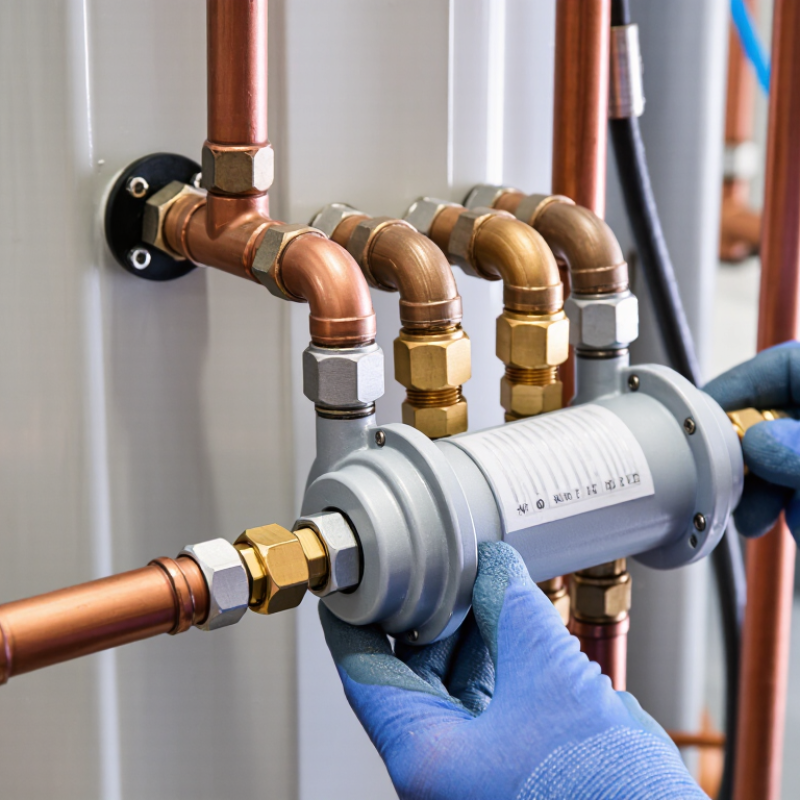
Choosing the right AC unit filter drier starts with identifying the refrigerant. Different refrigerants operate at different pressures and temperatures. A drier must tolerate those conditions without restricting flow or losing its sealing performance. Check the equipment nameplate, service records, and recovery cylinder label. Do not guess from pipe size alone.
Oil compatibility matters just as much. Mineral oil, POE oil, and other lubricant types react differently with moisture and filter materials. I inspect the compressor label before selecting the core. A drier rated for one oil system may perform poorly in another. Small details matter. Also check the required capacity, connection size, and allowable pressure drop for the system.
Circuit direction is easy to overlook. In a standard cooling circuit, refrigerant usually moves through the liquid line in one direction. Heat pumps may reverse flow during operation, requiring a bi-directional drier. Installing a directional model backward can reduce protection and increase restriction.
I mark the flow arrow before cutting the tubing. A perfect-looking match can still be wrong. I have learned to verify the manufacturer’s technical data twice, especially when older service labels are unclear.
Keep the drier sealed until installation, braze with clean tubing, and replace it after a serious compressor burnout or major moisture exposure.
Calculate mass flow from system capacity and refrigerant enthalpy change. For example, a 10 kW cooling circuit with a 200 kJ/kg enthalpy difference requires about 0.05 kg/s. ASHRAE Handbook—Fundamentals lists 1 refrigeration ton as 3.517 kW, which helps convert equipment data into a practical flow estimate. Compare that result with the AHRI 710 flow rating. The selected drier should maintain acceptable pressure drop at design load and during expected operating peaks.
Do not treat a larger shell as automatic protection. Oversizing may increase cost and reduce moisture-control efficiency. I have seen selections based only on connection size. That shortcut is tempting. It is also incomplete. Review the manufacturer’s AHRI 710 test data, pressure-drop curve, water capacity, and acid capacity. A rating at one refrigerant mass flow may not apply to another. Installation experience matters too: keep the drier sealed until fitting, use clean tubing, and verify flow direction. Recheck the calculation when a compressor or refrigerant changes.
7 Tips to Choose the Right AC Unit Filter Drier
Keep Liquid-Line Pressure Loss Below 2 psig Where Manufacturer-Specified
A filter drier should protect the system without restricting liquid flow. During commissioning, measure pressure before and after the drier. Keep the loss below 2 psig when the manufacturer specifies that limit. AHRI Standard 711 evaluates liquid-line filter-driers using rated flow and pressure-drop conditions. The ASHRAE Handbook—Refrigeration, 2022, also identifies excessive liquid-line pressure loss as a cause of flashing and reduced system performance. Tip 1: Match the drier to the refrigerant. Tip 2: Check rated capacity, not only connection size.
Select a model that fits the system’s actual tonnage and expected mass flow. Oversizing is not always safer. A large shell may hold more moisture, but its internal design still matters. Tip 3: Confirm the maximum allowable pressure drop. Tip 4: Use manufacturer capacity tables at the correct evaporating and condensing conditions. Tip 5: Install the drier in the proper liquid-line direction. I have seen reversed flow create unnecessary restriction.
Replace the drier after major system opening, compressor failure, or serious moisture exposure. Tip 6: Use clean tubing practices and cap the drier until installation. Tip 7: Recheck pressure drop after charging and stabilization. A gauge reading can mislead if temperatures are still changing. Record inlet pressure, outlet pressure, liquid temperature, refrigerant type, and operating load. The measurement may not be perfect. Repeating it later is often the wiser decision. (Sources: AHRI Standard 711; ASHRAE Handbook—Refrigeration, 2022.)
Choosing the right AC unit filter drier starts with identifying the contaminant, not matching the pipe size alone. Inspect the system history, refrigerant, oil type, and compressor condition. A sight glass may show moisture, but it cannot reveal every acid problem.
Molecular sieve desiccant is effective when moisture is the main concern. Use a suitable pore structure for the refrigerant and oil. For acid contamination, select a core containing acid-neutralizing media, often activated alumina or related compounds. Severe burnout conditions may require higher capacity, but excessive restriction can reduce system performance. Check the manufacturer’s pressure-drop data carefully.
Wax contamination needs a different response. Wax can form a sticky film near expansion devices and strainers. Choose a filter drier designed to capture wax, and verify its temperature range. Confirm compatibility with the refrigerant and lubricant before installation. Consider connection size, flow direction, moisture capacity, and replacement access. Install it cleanly, with capped tubing and minimal exposure to humid air. I have seen a new drier lose effectiveness after careless installation.
Do not judge capacity by physical size alone. A larger shell may still contain unsuitable chemistry. Measure system evacuation, monitor pressure drop, and inspect the removed core when possible. One detail is easy to miss: contamination levels can change after startup. Recheck the system instead of trusting one reading. Some selections will be imperfect, especially when the original failure is unclear. That uncertainty deserves documentation.
Select desiccant chemistry according to the dominant contaminant: moisture, acid, or wax.
The chart uses a comparative selection scale from 1 to 5, based on the commonly recognized functions of filter-drier media: molecular sieve is primarily used for deep moisture removal, activated alumina is commonly selected for acid control, and activated carbon is useful for wax and oil-related contamination. These ratings are a screening guide rather than measured capacity values; final selection should consider refrigerant compatibility, system temperature, pressure drop, contaminant load, and the manufacturer's technical data.
Tip 1: Verify the filter drier’s UL 207 pressure rating before installation. Compare it with the system’s maximum allowable pressure, not only its normal operating pressure. Check the current technical documentation and confirm suitable refrigerant compatibility. A drier may fit physically but still be unsuitable for the circuit. Measure twice.
Tip 2: Treat acid testing as part of replacement planning after compressor burnout, overheating, or moisture exposure. Take an oil sample from a clean service point, then use a suitable acid test method. Record the result, refrigerant type, suction temperature, and pressure drop across the drier. A single clean reading can be misleading if the system has not operated long enough.
Tip 3: Replace the drier according to evidence, not habit alone. High acid levels, repeated contamination, rising pressure drop, or a restricted liquid line indicate stronger action. After replacement, test again during stable operation. Keep the service record, including installation date and test results. Field experience shows that rushed changes often miss the original contamination source. That deserves reflection.
Choose a model with adequate capacity for moisture and acid removal, while matching the system’s flow requirements. Follow safe recovery, evacuation, and brazing practices. Use dry nitrogen during brazing when appropriate, because internal oxidation can create new contamination. The exact replacement interval remains system-dependent, and fixed schedules can sometimes waste a good component or delay a necessary change.
Check the equipment nameplate, service records, and recovery cylinder label. Do not identify refrigerant from pipe size alone. Pressure and temperature ratings must match the system.
Mineral oil, POE oil, and other lubricants interact differently with desiccants and filter materials. Check the compressor label before selecting the core. A suitable-looking drier may still perform poorly.
Confirm refrigerant, oil type, capacity, connection size, flow direction, and allowable pressure drop. Small details matter. Review technical data twice when service labels appear unclear.
Heat pumps can reverse refrigerant flow during operation. They usually require a bi-directional drier. A directional model installed backward may increase restriction.
Molecular sieve desiccant is commonly suitable when moisture is the main concern. Select the correct pore structure for the refrigerant and oil. A sight glass cannot reveal every acid problem.
Select a core containing acid-neutralizing media, such as activated alumina. Severe compressor burnout may require greater acid capacity. More capacity can also create unwanted restriction.
Choose a drier designed to capture wax and verify its temperature range. Wax may form a sticky film near expansion devices and strainers. Confirm lubricant and refrigerant compatibility.
Keep the drier sealed until installation. Use clean tubing and minimize humid-air exposure. A new drier can lose effectiveness after poor installation.
No. Physical size does not prove suitable desiccant chemistry or capacity. Check pressure-drop data and connection requirements. Bigger is not automatically safer.
Monitor evacuation, pressure drop, and contamination after startup. Contamination levels can change during operation. I may miss something when the original failure is unclear, so documentation helps.
Choosing the right Filter Drier Ac Unit requires more than selecting a component by size. Begin by identifying the refrigerant, oil type, and circuit direction so the drier is compatible with the system and installed correctly. Next, match its capacity to AHRI 710 ratings and the expected refrigerant mass flow. When manufacturer guidance applies, keep liquid-line pressure loss below 2 psig to support efficient operation and stable system performance.
Desiccant chemistry should reflect the contaminants present, including moisture, acid, or wax. Also verify that the drier’s UL 207 pressure rating is suitable for the system’s operating and safety requirements. Finally, establish a replacement plan based on acid-test results, operating conditions, and contamination levels rather than relying only on a fixed schedule. A carefully selected and properly monitored drier can help protect the compressor, maintain refrigerant cleanliness, and improve long-term reliability.

Taojun